Muay Thai basics
Muay Thai history and origins: from battlefield craft to national sport
Where Muay Thai comes from: Siamese soldiers, Ayutthaya, and the modern Rajadamnern ring.
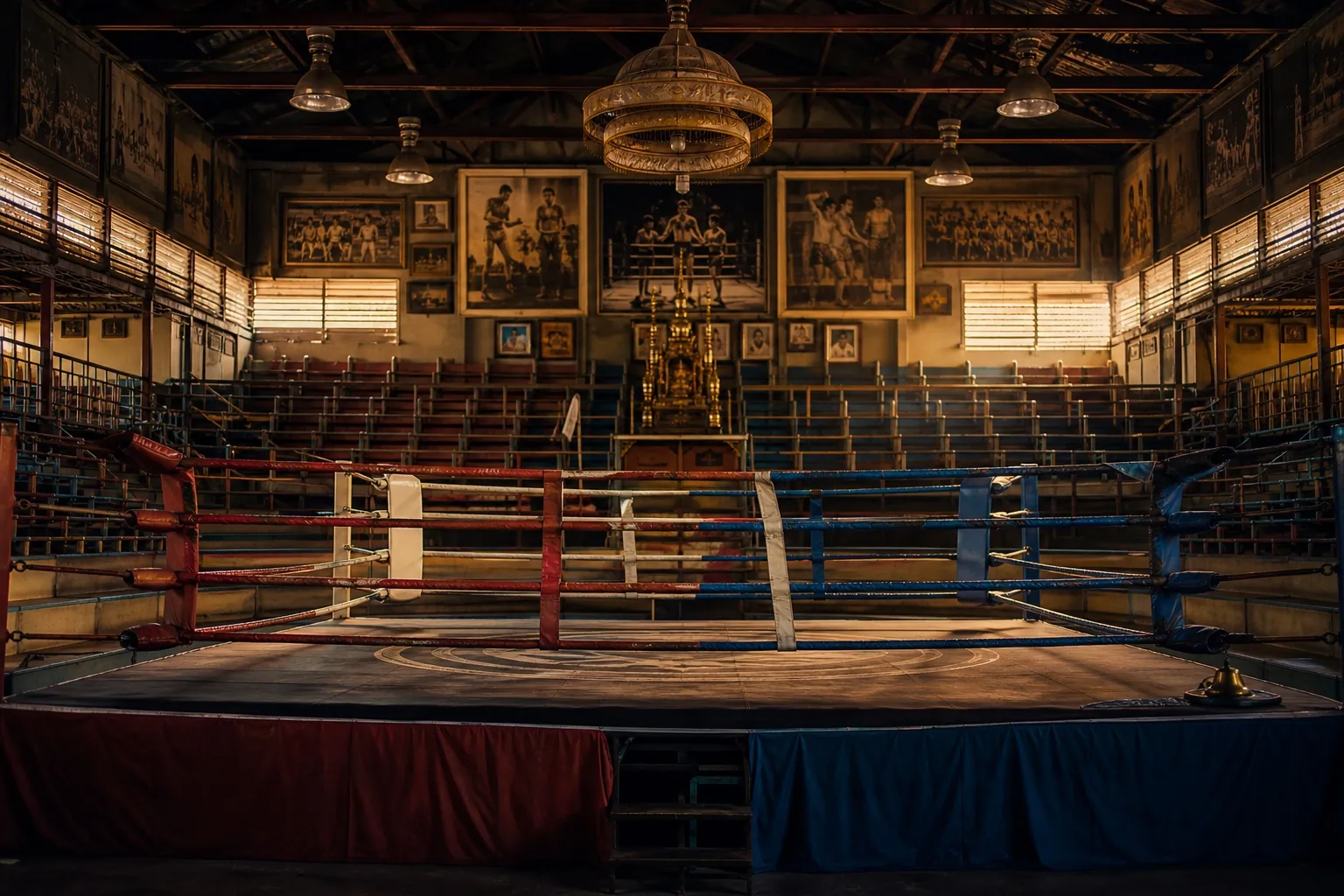
Muay Thai history starts with a fighting system, not a tourist class. Muay Thai (มวยไทย) is Thailand’s national sport. It uses punches, elbows, knees, and kicks — the Art of Eight Limbs — and it also carries Siamese military tradition, court ritual, and modern national identity.
Key takeaways
- Muay Thai is Thailand’s national sport: punches, elbows, knees, and kicks — the Art of Eight Limbs.
- Its shape traces to close fighting and Muay Boran in Ayutthaya-era Siam.
- Twentieth-century rules made Rajadamnern and Lumpinee the modern professional stages.
- A little history makes wai khru and wrapping feel less like theater.
- Pair a class with a stadium night if you want the living version of that history.
1. What Muay Thai is
For a short-stay traveler, a little background helps you read a first Bangkok class: from wai khru to wrapping, you can see what the coach is doing instead of only copying the motion.
2. Older origins: battlefield to village
The early form sits in thirteenth- to eighteenth-century Siam. In the Ayutthaya kingdom, soldiers used fists, elbows, knees, and shins at close range. In peacetime the same skills moved through villages and camps and became ruled contests.
Muay Boran is the ancestor: freer, more ornate, with techniques later dropped by sport rules. Traditional Bangkok camps still show some of that older rhythm — slower shadow work and unusual angles that differ from a modern fitness gym.
3. The modern ring: camps to Rajadamnern
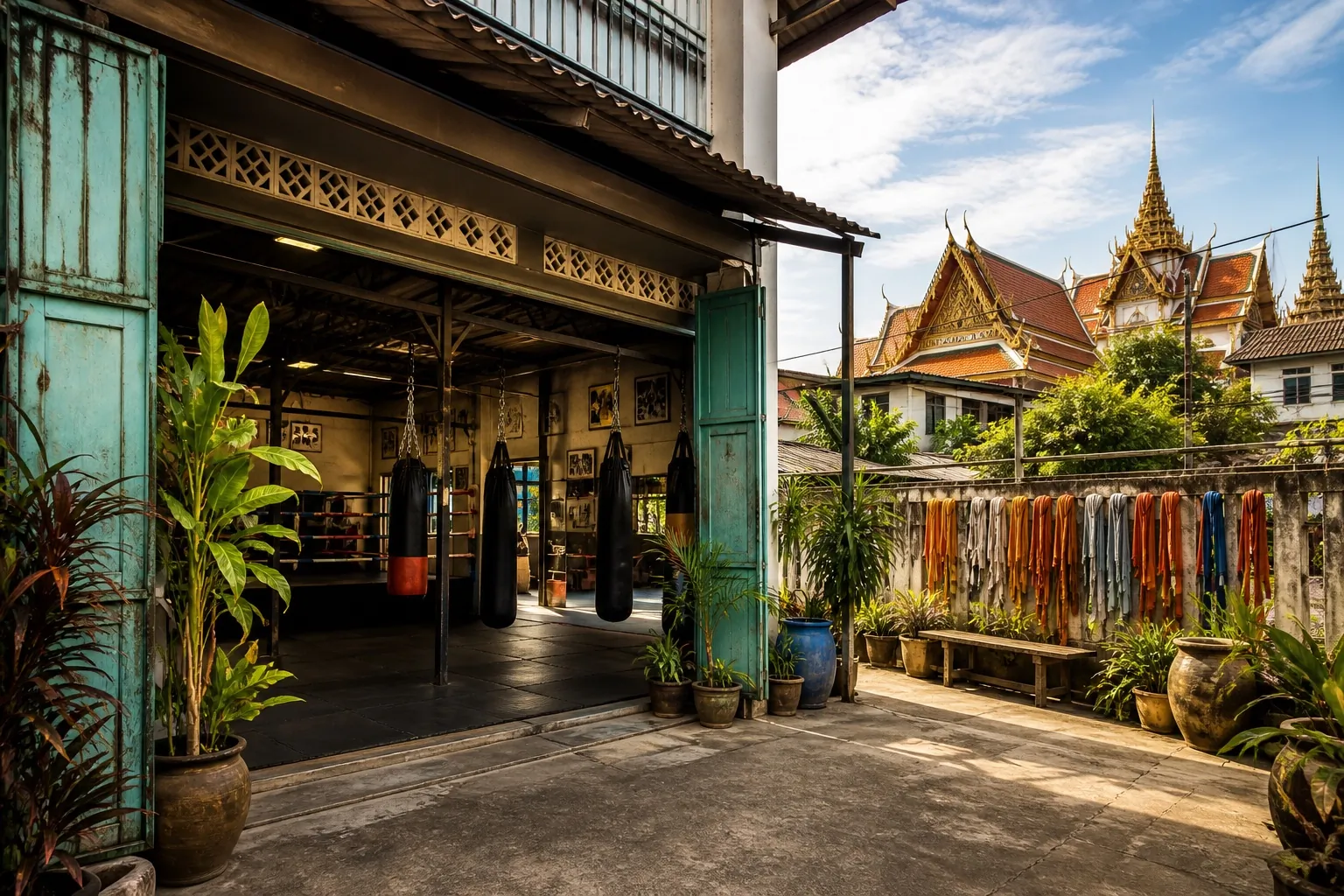
In the early twentieth century Muay Thai became a sport: fixed rounds, weight classes, gloves, and referees. Rajadamnern Stadium opened in the 1930s and marked the professional-ring era. Lumpinee Stadium became another landmark in the 1950s. Both names still mean top-level Muay Thai in Thailand.
The same period put Muay Thai into army fitness and school programs. That is why a Bangkok street can hold a traditional camp, a fitness gym, and a tourist-friendly class on one tree.
4. Why a traveler should know this
A First Punch Quest class will not lecture on history. When the coach wraps your hands, leads a short wai khru, and fixes your stance, those habits are centuries old. The class is not a photo stop. It is a living culture.
If the origin story interests you, read the wai khru culture guide and book a Rajadamnern or Lumpinee night. The ram muay on the card is the most direct extension of that history.
Frequently asked questions
How is Muay Thai different from MMA or kickboxing?
Muay Thai uses eight limbs, including elbows, knees, and clinch. Kickboxing usually limits elbows and knees. MMA adds wrestling and ground work.
Do travelers need the history before a class?
No. History is extra credit. Knowing wai khru and the teacher lineage makes the first class richer. See the wai khru culture guide.
Where can I see that history in Bangkok?
Watch a card at Rajadamnern or Lumpinee, choose a camp that still trains in a traditional rhythm, or notice the pre-class ritual.
Related reading
Muay Thai basics
Muay Thai culture and wai khru: what the pre-class ritual means
Wai khru, ram muay, and wrapping are not a show. They mark teacher lineage and respect before a Bangkok beginner class.
Techniques
Muay Thai eight limbs explained: fists, elbows, knees, and kicks
Why Muay Thai is called the Art of Eight Limbs, which range each weapon covers, and what a beginner class actually teaches.